The Chip Story Is Shifting From Performance to Control
The semiconductor industry loves a clean fairy tale.
A better chip arrives. Performance goes up. Customers cheer. The future advances by benchmark.
Nice story. Increasingly wrong one.
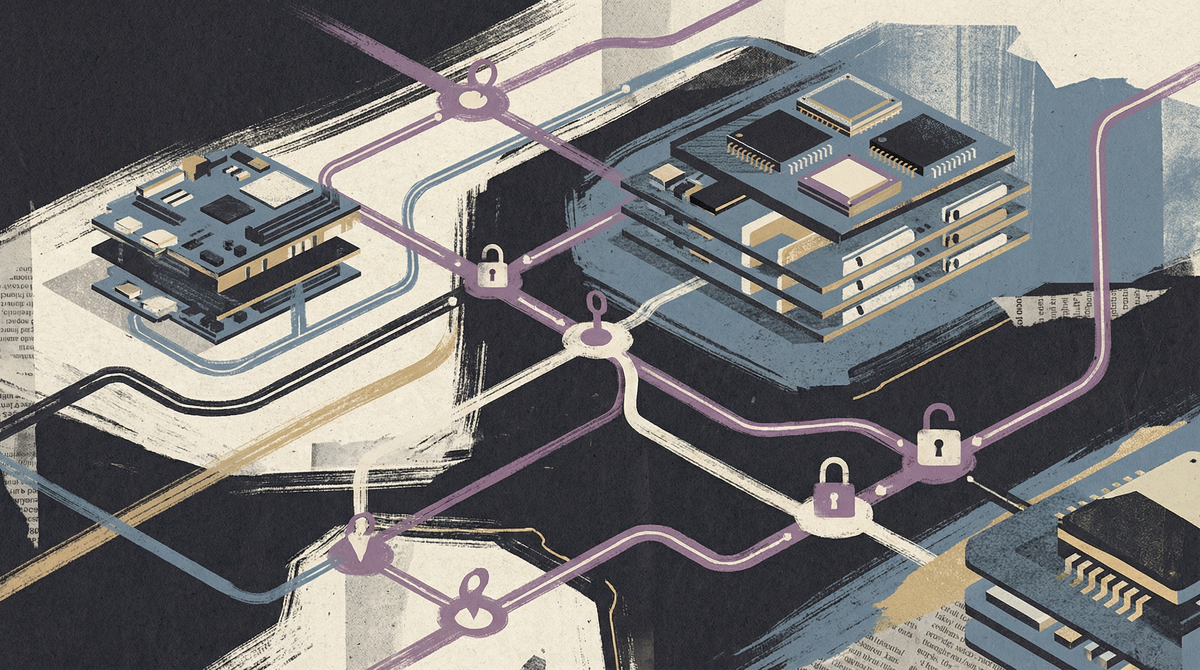
The more revealing shift in AI hardware is not just that new chips keep appearing. It is that more companies are deciding they no longer want to depend on someone else’s silicon roadmap, someone else’s allocation decisions, or someone else’s terms for access to compute.
That is why Arm’s move into its first in-house data-center CPU matters.
On paper, the announcement is straightforward enough: Arm launched the Arm AGI CPU, a production silicon product for AI data centers, with Meta as the lead partner and a broad ecosystem lineup around it. That is a real business milestone for a company that spent decades making money by licensing designs instead of shipping chips.
But the deeper story is not simply that Arm made a chip.
It is that AI is pushing more of the industry toward direct control of infrastructure.
The chip race is becoming a sovereignty race.
Performance still matters. Dependency matters more.
Of course performance matters. Nobody is building serious AI infrastructure out of sentiment.
But the strategic center of gravity has moved.
A few years ago, the hardware story could still be told mainly as a contest over speed, efficiency, and architecture. Now the more important question is who gets to own the bottlenecks.
Who controls the CPU that orchestrates the rack. Who controls the accelerator supply. Who controls packaging capacity. Who controls the memory relationship. Who controls the cloud access path. Who controls the commercial terms when demand outruns supply.
That is why Arm stepping from platform licensor into silicon producer matters beyond the product itself. It is a sign that the old neutral layers of the stack are getting less comfortable staying neutral.
Licensing is a good business. Owning the choke point is better.
AI is turning infrastructure partners into infrastructure competitors
One of the strange features of the current hardware market is that everyone keeps smiling while moving closer to each other’s territory.
Cloud companies design chips. Chip companies build more of the system. Architecture firms move toward finished silicon. Model companies increasingly talk like infrastructure planners. And everyone insists this is all perfectly harmonious because the market is huge.
Sure. It is also obviously a control contest.
Arm’s announcement crystallizes that tension in a particularly clean way. For years, its value came from sitting underneath a large ecosystem as a broadly enabling layer. Now it is moving upward into a more direct product role just as the market becomes more power-concentrated and supply-sensitive.
That does not mean every partner relationship suddenly turns adversarial. It does mean the old boundaries are weakening.
The AI boom is rewarding companies that can reduce dependency by owning more of the stack.
Futurum analyst Brendan Burke put part of the shift plainly: Arm is no longer acting only like a neutral IP supplier. It is moving into the business of selling finished CPUs into an AI data-center market where orchestration layers matter again. You do not have to buy every forecast attached to that argument to see the underlying signal. The industry is revaluing whichever layers can control coordination, allocation, and access.
And once that incentive becomes strong enough, everybody starts calling vertical integration “platform strategy.”
The new moat may be procurement certainty
This is one of the least glamorous but most important shifts in the whole sector.
The public tends to imagine AI competition as a battle of research quality and product cleverness. The industry increasingly behaves as if the real battle is over procurement certainty.
Can you actually get the components? Can you get them on time? Can you get them at a scale that does not leave your roadmap hostage to a handful of suppliers? Can you design around someone else’s scarcity instead of merely complaining about it on earnings calls?
That is where the chip story stops being a hardware story in the narrow sense and becomes an access story.
Arm’s move is interesting partly because it gives a wider range of customers a way to buy into a more complete CPU path without having to build their own chip program from scratch. That could matter especially for players too small to behave like hyperscalers but too ambitious to remain passive buyers forever.
Moor Insights & Strategy analyst Matt Kimball made the commercial angle explicit to Data Center Knowledge: the biggest cloud players will still have reason to pursue more customized silicon, but smaller providers may find an off-the-shelf Arm path far more attractive than building bespoke chips or paying someone else to do it.
In that sense, the product is not just silicon. It is a partial hedge against dependency.
And hedges become attractive when the whole market feels like it might seize up again.
The stack is getting tighter, and that changes who the future belongs to
There is a political economy hiding inside all this hardware talk.
When more of the AI stack gets vertically coordinated — chips, systems, cloud, orchestration, deployment — power tends to concentrate.
Some of that concentration is rational. Large-scale AI infrastructure is expensive, operationally difficult, and increasingly constrained by energy, manufacturing, packaging, and supply-chain complexity. It would be naive to expect a wide-open bazaar.
But concentration also changes the texture of innovation.
It means fewer meaningful points of leverage are public. It means more of the future gets negotiated in private supply agreements. It means technical possibility increasingly depends on who can secure preferred access before the rest of the market even sees the queue.
That should make people read chip announcements differently.
A new processor is not just a new processor. It can be a signal that another layer of the industry has decided dependency is too dangerous to tolerate.
This is what a maturing AI industry looks like
Immature industries talk about products. Maturing industries talk about control, even when they pretend not to.
That is where AI hardware is now.
The fun consumer story is still the chatbot. The real industrial story is that everybody with enough capital is trying to harden their access to compute before the next shortage, policy shock, or demand surge redraws the map again.
That does not mean every company will become vertically integrated. Most will not. But the aspiration itself tells you something. The market increasingly believes that dependence is fragility.
And in an environment like that, the companies that own more of the physical substrate gain more than margin. They gain strategic patience. They can plan further ahead. They can negotiate from strength. They can decide which customers get what, when.
That is a lot of power hiding inside a hardware roadmap.
The chip story is no longer about who is fastest alone
Speed still sells. Efficiency still matters. Benchmarks still do their little dance.
But the deeper contest is over who gets to stop asking permission.
Arm’s first in-house data-center CPU is one more sign that AI is pulling the industry toward ownership, tighter stack control, and a more explicit struggle over infrastructure sovereignty. Other companies will express the same instinct differently — custom accelerators, bespoke server designs, packaging alliances, long-term capacity reservations, cloud lock-in dressed up as convenience — but the instinct is the same.
Nobody serious wants to be merely adjacent to the bottleneck anymore. They want a hand on it.
That is why the chip story is shifting from performance to control. And once you see that, a lot of the industry’s recent moves stop looking like product launches and start looking like territorial claims.