Why Most AI Productivity Advice Feels Fake in Practice
A lot of AI productivity advice has the same smell.
Too clean. Too certain. Too eager to announce that everything is easier now.
You know the genre.
“Use these five prompts to get three hours back every day.” “Replace your workflow with this one weird stack.” “Stop doing everything manually.” “Let AI handle the rest.”
There is always a system. A template. A thread. A carousel. A person who now appears to live in a state of permanent throughput and suspicious spiritual hydration.
And yet, if you talk to people actually trying to use AI in real work, the emotional texture is usually very different.
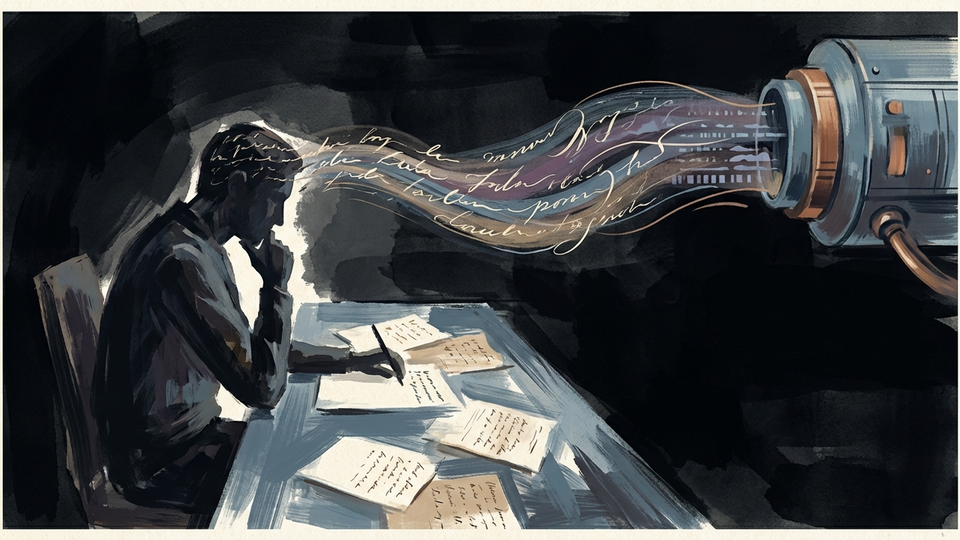
They are not floating through their day on a cloud of optimized leverage. They are reviewing. Checking. Rewriting. Comparing outputs. Trying to remember which tool did what. Wondering whether the time they saved on drafting got quietly re-spent on verification.
That is the part a lot of this genre still does not know how to say out loud.
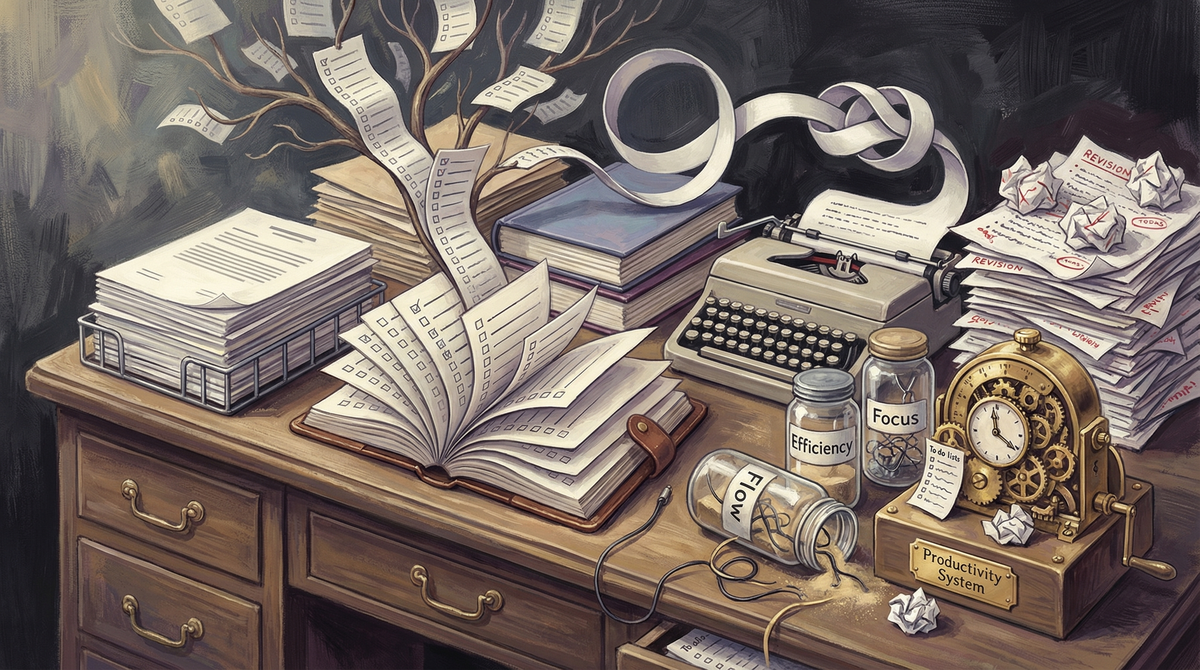
Most AI productivity advice feels fake in practice because it skips the friction layer.
It talks as if the work begins when the tool appears. It does not talk enough about what happens after.
The fantasy version of AI productivity is very simple
The fantasy is seductive because it tells a story people want to believe.
You used to do a task manually. Now the model does 80 percent of it. You review lightly. You move on. Your day opens up like a luxury apartment ad.
Sometimes that really does happen, at least for certain kinds of work.
But a lot of the time, what actually happens is messier.
The tool helps, yes. But it also introduces new decisions.
Now you have to decide:
- whether the draft is actually right
- whether the tone is usable
- whether the summary missed the point
- whether the output is generic in a way you can’t quite prove but definitely don’t want to publish
- whether you are saving time or just moving effort from one part of the task to another
That is not a minor detail. It is the whole experience.
A productivity system that ignores the cost of evaluation is not describing reality. It is describing a demo.
The real bottleneck often moves instead of disappearing
This is the thing a lot of AI advice gets wrong.
It assumes that when a task gets easier, the bottleneck vanishes.
Usually, it just moves.
Drafting becomes cheaper. Judgment becomes more expensive.
Idea generation becomes abundant. Selection becomes harder.
Search becomes faster. Trust becomes slower.
The first version arrives instantly. Now someone has to make sure it deserves to exist.
This is why people can feel both more productive and more burdened at the same time.
The workflow may indeed move faster. But the cognitive work becomes stranger. Less about raw execution. More about validation, calibration, sequencing, and deciding when not to believe the thing that sounds plausible.
That is still labor. It is just harder to count in a screenshot.
AI productivity advice often mistakes output for progress
A lot of the most shareable advice online is obsessed with visible output.
More drafts. More posts. More emails. More notes. More “assets.” More throughput.
But anyone who has done serious work knows that output alone is a terrible proxy for value.
A faster draft is only useful if it reduces the total cost of arriving at something good.
If the draft is generic, miscalibrated, bloated, or subtly wrong, then the work did not disappear. It just changed shape.
Now the human has to:
- trim it
- correct it
- de-sludge it
- fact-check it
- add actual taste
- restore a point of view
- remove the weirdly polished emptiness that so much AI-generated text still carries around like cologne
That does not mean the tool failed. It means the workflow is more complex than the advice usually admits.

Photo by Tima Miroshnichenko on Pexels.
Real work has drag that prompt threads cannot see
One reason AI productivity advice so often sounds fake is that it treats tasks as if they live in isolation.
But most real work does not happen in isolated tasks. It happens in tangled environments.
There are approvals. Dependencies. Context gaps. Changing expectations. Half-finished documents. Missing inputs. Ambiguous goals. Stakeholders who want different things. Systems that do not talk to each other. A brain that is already carrying too many tabs.
In that kind of environment, AI does not simply remove friction. Sometimes it reveals where the friction actually was.
That can still be useful. But it is a different kind of usefulness than the advice usually promises.
It is less “this tool saves me three hours.” More “this tool exposed how badly the process was designed in the first place.”
That is valuable. It just does not fit neatly into a viral checklist.
The best use of AI is often narrower than the advice implies
Another reason generic AI productivity advice breaks down is that it is usually too broad.
It tries to turn AI into a total lifestyle.
Use it for email. Use it for meetings. Use it for strategy. Use it for research. Use it for writing. Use it for planning. Use it for all your admin. Use it to think. Use it to decide. Use it to finally become the person your Monday Notion page has always believed you could be.
This is where the advice starts to drift from useful into vaguely evangelical.
In practice, the strongest AI gains often come from much narrower interventions.
Not “use AI for everything.” But:
- use it for the first rough pass on a repetitive draft
- use it to cluster messy notes before you decide what matters
- use it to compare options
- use it to structure information you already understand
- use it where the risk of imperfection is manageable and the value of speed is real
That is less dramatic. It is also more honest.
The productivity gains are often real. They are just highly sensitive to task type, quality bar, and how much human judgment the outcome still requires.
This is why some people feel more overwhelmed, not less
There is a hidden cruelty in a lot of AI productivity rhetoric.
It assumes that if the tool exists, then the worker should now be able to do more.
That assumption travels fast.
Leaders see the demos. Managers see the possibilities. Teams hear the message. The volume expectation quietly shifts.
Now the worker is not just doing the job. They are doing the job, learning the tools, evaluating the outputs, and absorbing the expectation that this should all somehow feel easier.
Last year, Upwork’s Research Institute reported that 77% of workers using AI said the tools had increased their workload, with many spending more time reviewing AI-generated content or struggling to achieve the productivity gains their employers expected.
That stat lands because it names what a lot of the discourse still refuses to acknowledge.
Badly integrated AI does not reduce pressure. It redistributes it onto the person least able to narrate what just changed.

Photo by Yan Krukau on Pexels.
Good AI productivity advice would sound less magical and more operational
If the current genre often feels fake, what would the honest version sound like?
Probably something like this:
- start with one recurring pain point, not your entire life
- identify where the workflow is actually slow
- use AI where speed helps but perfection is not the first requirement
- account for review time, not just generation time
- be explicit about where human judgment still has to live
- do not confuse more output with better work
- if the tool adds complexity, admit it quickly
- if the workflow still feels bad, redesign the workflow instead of collecting more tools
That kind of advice is less glamorous. It is also much more likely to survive contact with Tuesday.
The real productivity question is not “can AI do this?”
It is “what does this do to the total shape of the work?”
That is the question I wish more productivity advice would ask.
Not:
- can the tool generate the draft?
But:
- what does using the tool do to the entire task?
- where does quality control move?
- who absorbs the uncertainty?
- what new friction appears?
- what gets easier, and what gets quietly harder?
Those questions are slower. They are less flashy. They are also where reality lives.
Productivity without honesty is just propaganda for a workflow nobody actually enjoys
I do not think most AI productivity advice is malicious.
A lot of it is just incomplete. It is written from the point of novelty, not from the point of sustained use. It captures the thrill of acceleration, but not the cost of living inside the acceleration afterward.
That is why so much of it feels fake.
Not because AI never helps. It clearly does.
But because help is not the same thing as simplicity. And faster is not the same thing as lighter.
The honest story is better anyway.
AI can be genuinely useful. It can remove drag. It can improve momentum. It can turn some ugly tasks into smaller ones.
But it can also generate more to review, more to manage, more to second-guess, and more pressure to perform the appearance of efficiency.
Any advice worth trusting should be able to hold both truths at once.
Otherwise it is not productivity advice. It is just marketing for a workflow nobody has tested under real emotional conditions.