The First Real Labor Shift in AI Is Workflow Redesign, Not Mass Replacement
If you listen to the loudest AI arguments, you would think we are all waiting for the same moment.
A clean break. A dramatic replacement. A before and after sharp enough to fit in a headline.
One day the humans do the work. The next day the machines do. Cue the panic, the think pieces, the LinkedIn philosophers with ring lights and apocalypse fonts.
But that is not what the early labor shift actually looks like.
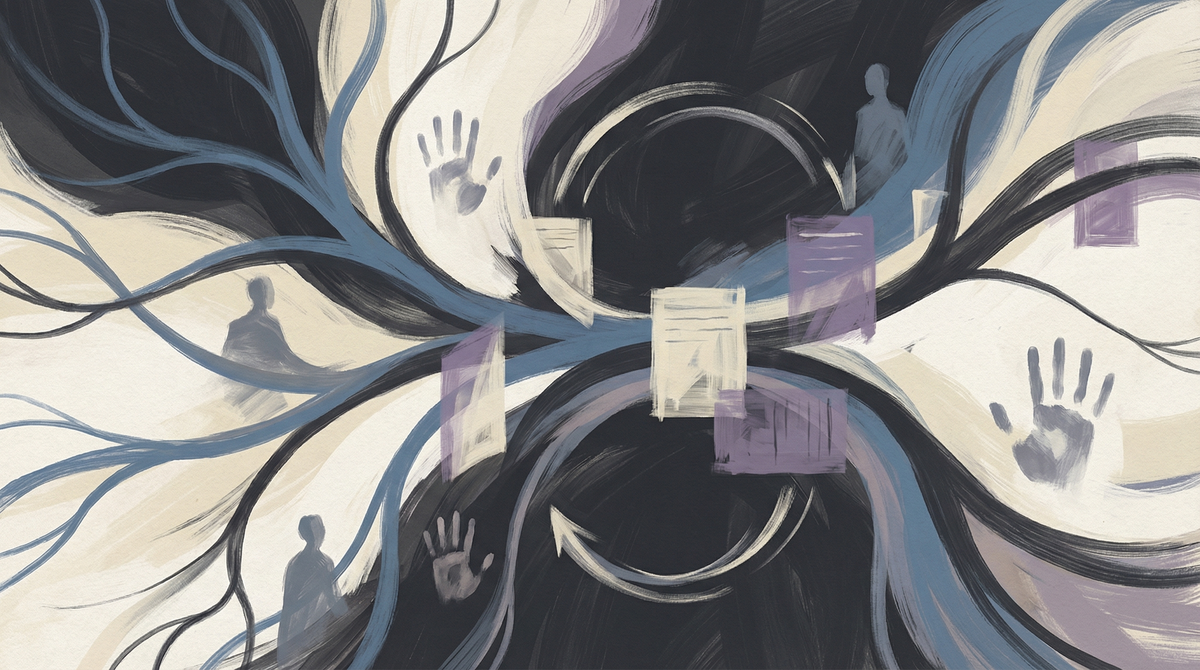
The first real impact of AI at work is not mass replacement. It is workflow redesign.
It is the slow, sometimes messy, often under-the-radar rewriting of how tasks move, who reviews what, where judgment lives, what gets escalated, which steps disappear, and which new responsibilities quietly show up in their place.
That matters because workflow redesign is easier to miss than layoffs. It does not arrive with one cinematic event. It arrives in changed expectations.
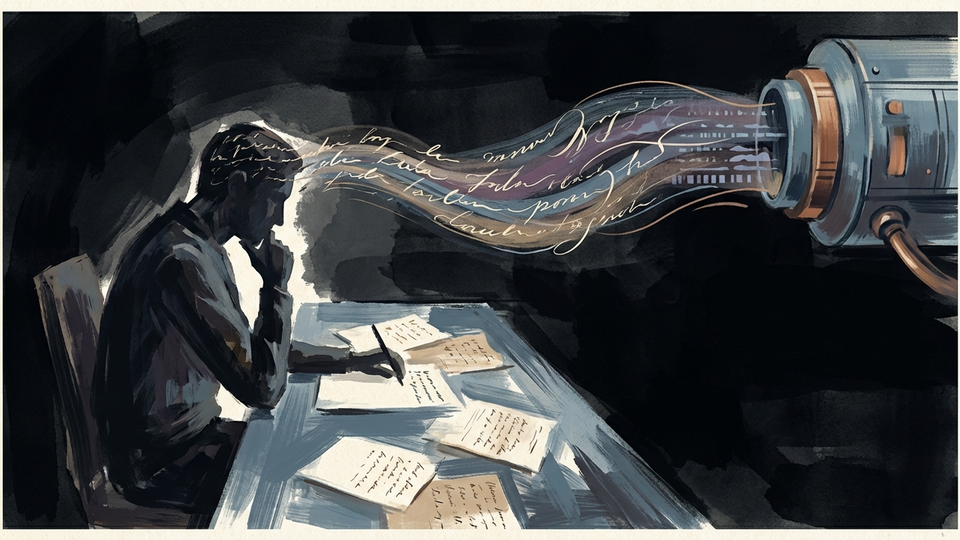
The draft now comes from AI first. The manager now reviews more than they create. The expert is now asked to define constraints instead of doing the first pass. The worker is now responsible for supervising output they did not fully generate.
That is not a footnote to the labor story. It is the labor story, at least for now.
Replacement is the wrong first question
The replacement frame is seductive because it is simple.
Will AI take the job or not? Will this role survive or not? Will companies cut headcount or not?
Those are real questions. They just are not the only questions, and they are often not the first ones that matter.
What tends to change first is the shape of the work.
Before a company eliminates a role entirely, it usually starts by changing:
- how a task gets drafted
- who checks it
- how much context has to be carried by the human
- where decisions are made
- what counts as value-added work
- and what kind of judgment is now expected from the person still in the loop
That is why so much AI debate feels oddly detached from how organizations actually behave. People keep looking for a dramatic substitution event while companies are busy doing something more incremental and, in some ways, more consequential: reorganizing the workflow around a new layer of machine participation.
That is the part that changes daily life long before a clean employment statistic catches up.
AI does not just automate tasks. It rearranges the burden of work.
One of the lazier ways to talk about AI is to say it “takes tasks off people’s plates.”
Sometimes it does.
But very often it does something more complicated.
It removes one kind of burden and adds another.
The first draft is faster, but now someone has to validate it. The summary is instant, but now someone has to decide whether the summary missed the point. The process moves faster, but now edge cases pile up at the human checkpoint. The tool saves time locally, while increasing coordination pressure everywhere else.
That is why AI can feel both helpful and exhausting at the same time.
Last year, Upwork’s Research Institute found that 77% of employees using AI said the tools had actually decreased their productivity and added to their workload in at least one way. The reasons were revealing: more time reviewing AI-generated content, more time learning the tools, and more work being asked of them as a result of AI adoption.
That is not a failure of the underlying models so much as a failure of process design.
Too many organizations are introducing AI into old operating systems and then acting surprised when the result feels like chaos with better branding.

Photo by Sora Shimazaki on Pexels.
What changes first inside real organizations
When AI enters a workplace, the first shift is often not “the AI does the whole job now.”
It is more like this:
- AI drafts, the human edits
- AI summarizes, the human validates
- AI triages, the human escalates
- AI generates options, the human selects
- AI runs the middle of the process, while the human owns the exceptions, constraints, and signoff
That is workflow redesign.
And once you start seeing it, you see it everywhere.
At Microsoft, a recent WorkLab piece made this point more clearly than most corporate AI writing usually does. It described a shift from “power users,” who simply move faster with AI, to what it called “Frontier Professionals,” people who change the shape of the work itself.
One example in the piece involves a bank in Norway using Copilot to summarize a compliance report that had ballooned to hundreds of pages. The real breakthrough was not the summary. It was that someone finally asked why the report was that long in the first place. The report, according to Microsoft, was ultimately reduced to six pages.
That is the important part.
The tool did not merely speed up the old workflow. It forced a confrontation with whether the old workflow made sense at all.
That is where AI gets interesting at work: not when it adds a little velocity to a dumb process, but when it exposes the dumbness of the process itself.
The new human role is often upstream
A lot of people still imagine AI at work as a downstream tool.
You finish thinking. Then the system helps you write faster, summarize faster, sort faster, answer faster.
But in many of the more durable enterprise use cases, the human role is moving upstream.
The work increasingly happens in questions like:
- what should this system be allowed to do?
- what counts as a good output?
- what context should shape performance?
- where are the failure modes?
- what gets automated, and what still requires human judgment?
That is not busywork. That is process architecture.
Microsoft’s legal example in the same piece gets at this nicely. A legal domain expert was not simply reviewing contracts faster. She was helping define how AI systems for legal professionals should be structured, constrained, and evaluated in the first place.
That is a different kind of work.
Less repetitive execution. More system design, quality definition, and responsibility for how the output behaves under pressure.
This is one reason the phrase “AI will free people for higher-value work” sometimes lands as corporate wallpaper. It is directionally true, but only if someone is honest about what that “higher-value work” actually is.
A lot of it is not glamorous. It is governance. It is judgment. It is exception handling. It is defining standards. It is owning the system when the output looks plausible but is quietly wrong.
That is still work. It is just different work.

Photo by Pavel Danilyuk on Pexels.
The labor shift is also a management shift
This is the part I think many leaders still underestimate.
Workflow redesign does not just change what individual contributors do. It changes what managers are managing.
Instead of overseeing only human output, they increasingly oversee a blended stream of human work, AI output, and human correction layered on top of machine participation.
Which means the management task starts changing too.
Now the questions become:
- where should AI enter the process?
- where should it stop?
- where does review become a bottleneck?
- what errors are becoming more likely, not less?
- what metrics still make sense if drafting is cheap but judgment is scarce?
That last one matters.
Many organizations still measure productivity as if speed were the whole story. More output. Faster turnaround. Greater volume.
But if AI makes first drafts abundant, then the scarce thing shifts.
The scarce thing becomes:
- discernment
- verification
- prioritization
- taste
- trust
- the ability to design a process that does not collapse under the weight of synthetic output
That is not a minor adjustment. That is a management philosophy problem.
This is why some workers feel more pressure, not less
There is a persistent fantasy in AI discourse that automation naturally lightens the load.
Sometimes it does. But badly designed AI processes often do the opposite.
They create what you might call cognitive debt.
The worker is now expected to move faster because the tool exists. The organization assumes throughput should rise. The human is still responsible for quality. And nobody has truly redesigned the process around those new realities.
So instead of liberation, you get compression.
The human becomes:
- reviewer
- checker
- fixer
- exception handler
- context restorer
- final accountability layer
That is a lot to pile onto a person while telling them the machine is helping.
Which is why the first wave of AI work adoption has so often felt contradictory. Leaders see more output and call it progress. Workers feel more drag and call it what it is.
Both can be true in the same system.
Photo by Mikhail Nilov on Pexels.
The smartest organizations are redesigning work, not just adding tools
This is the dividing line that matters.
Weak AI adoption looks like this:
- mandate the tool
- encourage experimentation
- chase output gains
- leave the process largely untouched
- hope employees figure it out
Strong AI adoption looks more like this:
- pick a recurring high-friction workflow
- map the current process honestly
- identify where AI helps, where it harms, and where human judgment still belongs
- redesign the handoffs
- define standards for review and escalation
- measure whether the workflow actually improved
That is harder. It is also much closer to reality.
The organizations that get real value from AI will not be the ones with the most licenses. They will be the ones willing to rethink the structure of work itself.
Because AI is not just a productivity layer. It is a pressure test on whether your process ever made sense in the first place.
The future of work will be shaped in the handoff layer
If you want to know where the labor story is actually moving, do not just ask what the model can do.
Ask:
- what happens to the first draft?
- who now owns the review?
- where does judgment move?
- what new responsibilities are emerging?
- what part of the job is becoming more valuable because the middle is getting cheaper?
That is where the real change shows up.
Not in the loudest replacement fantasy. Not in the cleanest automation demo. But in the handoff layer — the place where human judgment and machine output now have to meet each other every day.
That is where processes are being rewritten. That is where labor is being reorganized. And that is why the first real labor shift in AI is not mass replacement.
It is the redesign of the work itself.